The kid can play
On a day that could have seen England surrender to an innings defeat, Jacob Bethell lit up the SCG with a sparkling century.

This is the future, and we are already living in it. Under a cloudless Sydney sky, Jacob Bethell announced himself not with noise but with calm, anticipation replaced with certainty. A maiden Test hundred, made with the composure and assurance of a veteran, was less of an arrival and closer to a confirmation of what those in the know have long suspected.
Australia is a clarifying place. Talent, when it is genuine, reveals itself. Bethell walked out with a wicket lost in the first over again, Starc irresistible, England still 178 runs short of making Australia bat again, already facing the sense of a game slipping to an innings defeat. He was still there at the close of play, a day still dominated by Australia turned into something more complicated. While the scoreboard belonged to the hosts, Bethell added a gloss of genuine resistance, the emergence of rare, unmistakable quality amid the inevitable.
For much of this strange Ashes tour, Bethell has hovered on the periphery. The youngest in the squad, he was picked in case of breakage and for four years’ time. The highlight thus far was a brief viral moment doing the YMCA in a Noosa bar. He was a new blonde toy to look at, the object of playful banter.
But those in the know that saw had seen him spoke without hesitation, so much so that the outcome felt preordained. Michael Powell, his coach at Rugby School, felt it immediately. “Hand on heart, the first time I saw him swing a bat, I thought he’d play international cricket.” Brian Lara saw Bethell when a child, describing him as better than he had been at 11. At Warwickshire, Ian Bell called him the best 17-year-old he had ever seen.
Tossed into the cauldron of the Boxing Day Test, Bethell top-scored with 40 in the victorious chase, though it was not the volume of runs but the manner of them that caught the eye. One moment, in particular: a checked-on drive, a couple of measured steps down the pitch, played off Scott Boland, a bowler who rarely grants validation and offers nothing freely. The bat came down arrow-straight, balance immaculate. Mark Waugh, the height of aesthetically pleasing batting, made an involuntary noise of approval on commentary, blurted out before cohesive analysis can be formulated.
Until today, Bethell had the tendency to look beautiful for 20 and then depart, a fleeting promise unfulfilled. Today, though, he just… didn’t ever look like getting out. Apart from a single, glorious on-drive off Michael Neser, his scoring shots were restrained, almost conservative. Stylistically, he was closer to Root than Brook: accumulation rather than exhibition, precise rather than reaching. He worked the ball square of the wicket with soft hands, luxuriant back-foot punches timed rather than muscled to beat point and cover. When the bowlers overpitched on the stumps, the response was clipped off the pads, wrists rolling the ball into gaps; when it was full and wide, it was sent screaming, a cover drive unfurled so cleanly the shot felt inevitable rather than chosen.
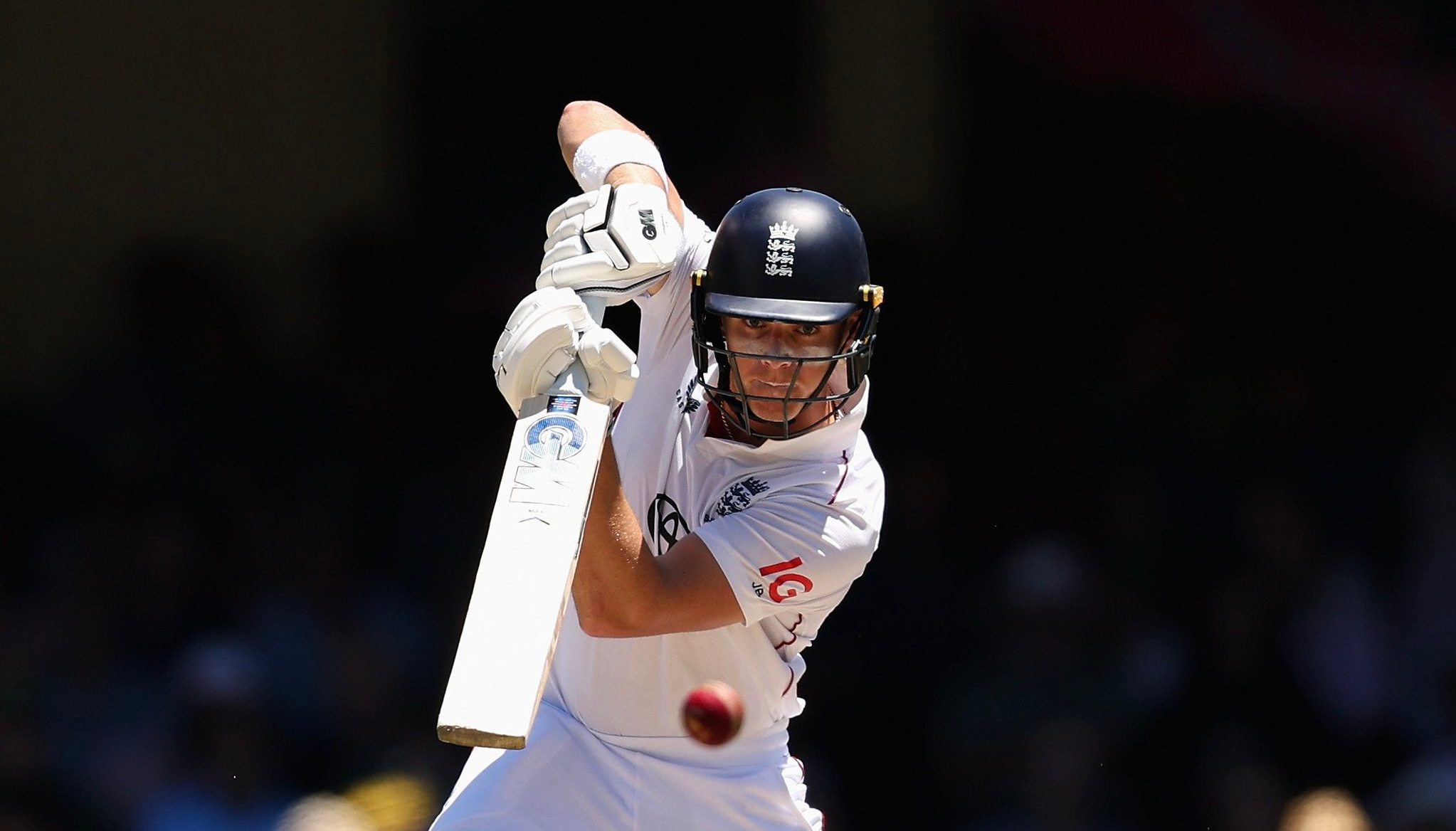
Against the part-time spin, there was no indulgence. Anything short was pulled, without flourish, rocking back, head still, connecting cleanly and dispatching the ball through midwicket. Throughout, the innings progressed at its own pace, immune to the score, the match pressure, and the noise around it. Zinc cream daubed across both cheeks, mouth working around a piece of chewing gum, he offered no chances, batting with a control that almost felt old-fashioned, deliberate, measured.
He faced seven balls on ninety-nine, content to wait, content to trust. Finally, he decided that enough was enough, skipping down the pitch to Webster and smashing one wide of long-on for four, cleanly, decisively, the first naked aggression of the innings. A maiden first-class hundred. A maiden Test hundred. In an England shirt.
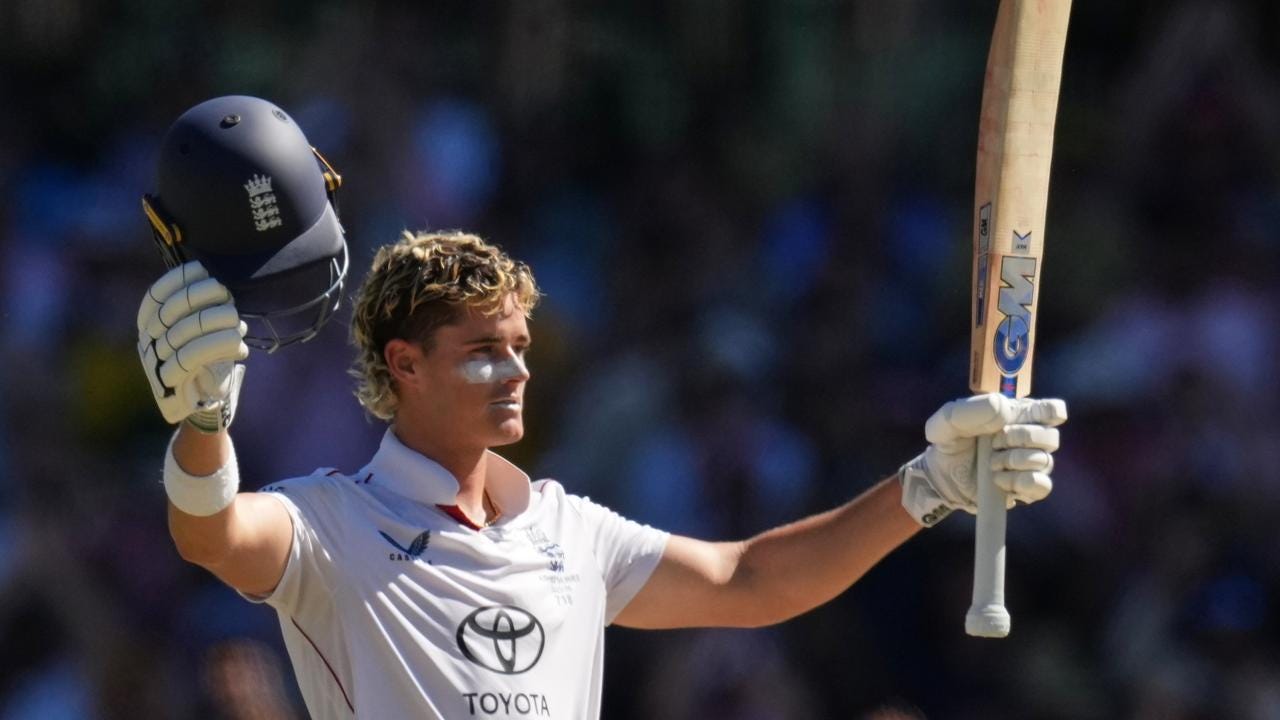
In the stands, his father quietly wept. It was that kind of day.
It has taken Joe Root four tours of Australia to score a century; Bethell has done it in four innings. The comparison is not just about numbers, but tone. This was as complete a maiden Test century as can be imagined, not a scramble, not a counterpunch, but a controlled masterclass. He finished on 142 from 232 balls, somehow facing more deliveries in an afternoon than he faced in all red-ball cricket last summer. It is a statistical oddity that highlights just how unusual his path has been to this point. Imagine what he might achieve with the seasoning of some county cricket, with time at the crease, learning the nuance that can only be acquired through repetition. As it stands, his talent is luminous; with proper preparation, it could be transformative.
With this century, he joins some serious company. The list of England Test centurions under the age of 23 across the past 90 years reads: Hutton, Compton, Edrich, May, Cowdrey, Botham, Gower, Atherton, Cook, Root, Stokes, Pope, Crawley - and now Bethell.

There will be a rush to define him, to tear him down, to question why he was given opportunities, his lack of county miles, his haircut, whatever detail happens to irritate. That is the rhythm of English sport. For now, though, resist it. This was an of an established Test batter, not a 22-year-old playing his sixth Test.
England have been starved of certainties on this disappointing tour, of moments that point cleanly forward, rather than calcify into further questions. Today, Bethell offered a glimpse of a future that has been hard to discern, a reminder that England are capable of producing orthodox Test batters besides Root. In that, it was worth its weight in gold.
For once, let’s just give him some time. This one’s special.